
Kogarah NSW 2217

A Kogarah cleaner finds a defect and reporting it is not fixing it

A cleaning crew walks every part of a building several times a week, which makes them the most frequent observer it has. That is useful right up to the point where somebody assumes that seeing a problem and being responsible for it are the same thing.

In short

A cleaner attending common property in a Kogarah building will notice defects long before most occupiers do. Reporting them is genuinely valuable to the owners corporation, but a report is not an approval, a repair or an assumption of responsibility for the condition observed. The distinction matters because cleaning and maintenance run on different budgets and different decisions.

Clean Best records observations and passes them to the nominated contact rather than acting on them. Cleaning corrections are closed by the contractor; maintenance items are handed to the party who funds and decides them, which is usually the committee or the building manager. That keeps two quite different processes from being confused with each other.

The most frequent observer in the building

Nobody else covers a building the way a cleaning crew does. Occupiers see their own areas, a building manager may visit weekly, and a committee member might walk the property twice a year. The cleaner is in the fire stair, the bin room, the car park and the plant room approach on every attendance, which is where most emerging problems first show themselves. Continuous coverage of that kind is genuinely rare in a building.

That makes routine reporting one of the more valuable things a scheme gets from its cleaning arrangement, and it costs nothing. A short list of observations each month gives an owners corporation a running picture of its own building from the only party with continuous coverage of it. Many committees discover it is the most useful document they receive all year. It is also the one document that arrives without anybody having to commission it.
Why a cleaner should not quietly fix things

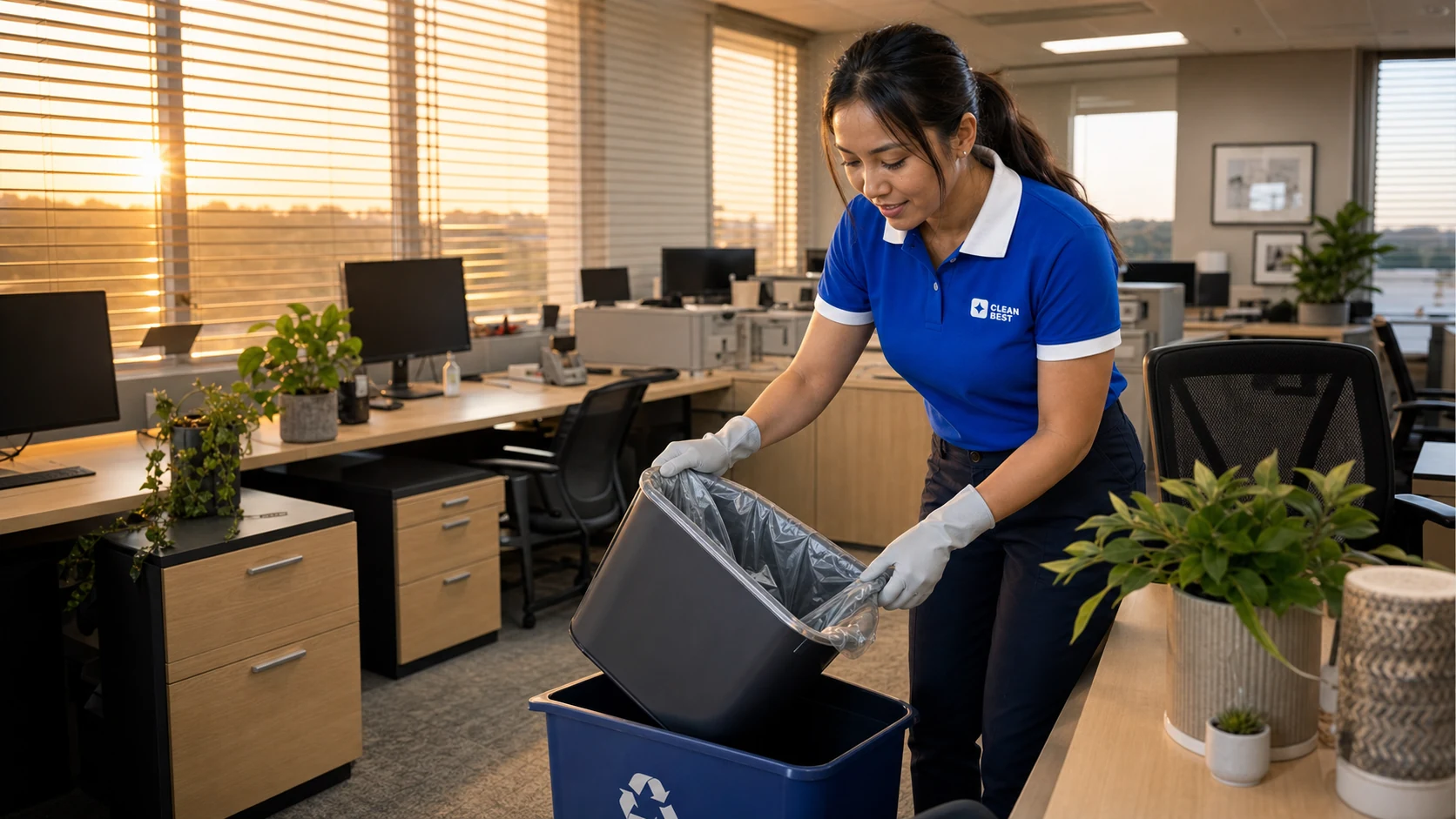
The instinct to help is strong and usually wrong. Tightening a loose fitting, resetting a door closer or clearing a drain removes the visible symptom and the evidence together, and the underlying problem continues unobserved until it fails properly. It also blurs responsibility, because the contractor has now worked on something outside their scope and their insurance. A helpful intervention can quietly defer a failure to a much worse moment.

The correct response is narrow and consistent. Make the area safe if there is an immediate hazard, record what was found, and report it. That is not a lack of initiative; it is what keeps the maintenance question with the party that funds it. Clean Best works to that boundary and states it in the scope so nobody mistakes it for indifference. Crews told plainly where the line sits are far more comfortable holding it.

A report is not an approval

Committees occasionally treat a contractor's report as though it settles a question. It does not. An observation that a surface is deteriorating is not a specification, a diagnosis or a recommendation about what should be done, and a cleaning contractor is not the right party to provide any of those. Treating a report that way leads to decisions made on inadequate information. A contractor asked to give one is being asked to work outside their competence.

What the report does is trigger the right process. The owners corporation decides whether to investigate, engage a specialist, or monitor it. That process may be slow and it may conclude that nothing needs doing, and both outcomes are legitimate. The report's value is that the decision was made deliberately rather than by default because nobody knew. Deliberate inaction is a legitimate decision; accidental inaction is not.

Reporting arrangements for a Kogarah building

  • A named recipient for observations outside the cleaning scope
  • A short monthly list rather than ad hoc messages
  • An instruction to make safe but not to repair
  • Cleaning corrections closed separately from maintenance items
  • Recognition that a report is not a diagnosis
  • A record kept by the scheme, not only by the contractor
Clean Best supervisor reviewing office and strata cleaning quality in Parramatta NSW

Working in Kogarah and the St George

Kogarah in the St George area carries healthcare, professional offices, education and retail premises, with commercial buildings that combine consulting suites, offices and public-facing tenancies under shared management. Buildings of that mix are walked constantly by cleaning crews and rarely by anybody else with a reason to look at condition. The owners corporation funds maintenance from a different budget and through a different decision path than cleaning. Clean Best services Kogarah from Seven Hills and keeps observation and repair firmly separated.

Questions about Kogarah

Can your cleaners fix small things while they are there?

No, and that is deliberate. Adjusting fittings or clearing drains removes the symptom and the evidence together, and it puts a contractor to work outside their scope and their insurance. The instruction is to make an area safe if there is an immediate hazard, record what was found and report it to the nominated contact.

What should a defect report actually contain?

What was observed, where and when, in plain description rather than diagnosis. A cleaning contractor is not the right party to say why something is failing or what should be done about it. The report's purpose is to put the observation in front of the owners corporation so it can decide whether to investigate further.

Who should receive the reports?

A named contact, usually the building manager or the strata managing agent, rather than whoever happens to be on site. Reports sent to individuals tend to disappear when that person changes. Naming the recipient in the scope means the arrangement survives a change of committee or agent without anybody having to re-establish it. It also gives the committee one place to look when reviewing what has been raised.

Does reporting a defect make us responsible for it?

The owners corporation's responsibilities for common property exist independently of whether a contractor mentioned something, and questions of that kind belong with the scheme's strata managing agent and whatever advice it takes. What a report does is ensure a decision is made deliberately rather than by default because nobody was aware of the issue. The value of the report lies in the decision it prompts.

We get too many reports. Can they be summarised?

Yes, and a short monthly list usually works better than messages sent as things are noticed. Immediate hazards are raised straight away, and everything else is collected. That gives the committee one document to work through rather than a stream of items, and it makes the pattern visible in a way individual messages never do.

Get a fixed written quote for Kogarah

Free walkthrough, scope in writing, price back within 24 hours.

Request a quote
Call nowEmail us